Supporting Town Centres and businesses throughout the UK.
The provision of legal local publicity space for business and tourism helps reduce street clutter and stimulate the local economy.
Nine good reasons (at the least) why towns need publicity pillars
Everyone benefits….. WHY?
- Businesses – Get affordable publicity where it counts.
- Communities – See what's on offer, where to go and what to do.
- Deserving Causes – Get unsold space allocated free of charge.
- Events – Get high impact, reasonably priced effective publicity.
- Free standing – means simple planning processes.
- Green Machine – Recyclable, no power required.
- Historic – Look in the past and you probably had pillars long ago.
- Illegal Advertising – towns reduce A-boarding and Flyposting.
Businesses
In these days where town centres are struggling and local traders under constant pressure from out-of-town retail outlets, Information Pillars are the affordable alternative to costly and power-hungry * digital screens.
Councils with PIP pillars are seen to be helping local businesses. Local businesses get affordable high impact, high-quality publicity. These pillars do not compete with bus-shelter or other large format displays advertising national brands.
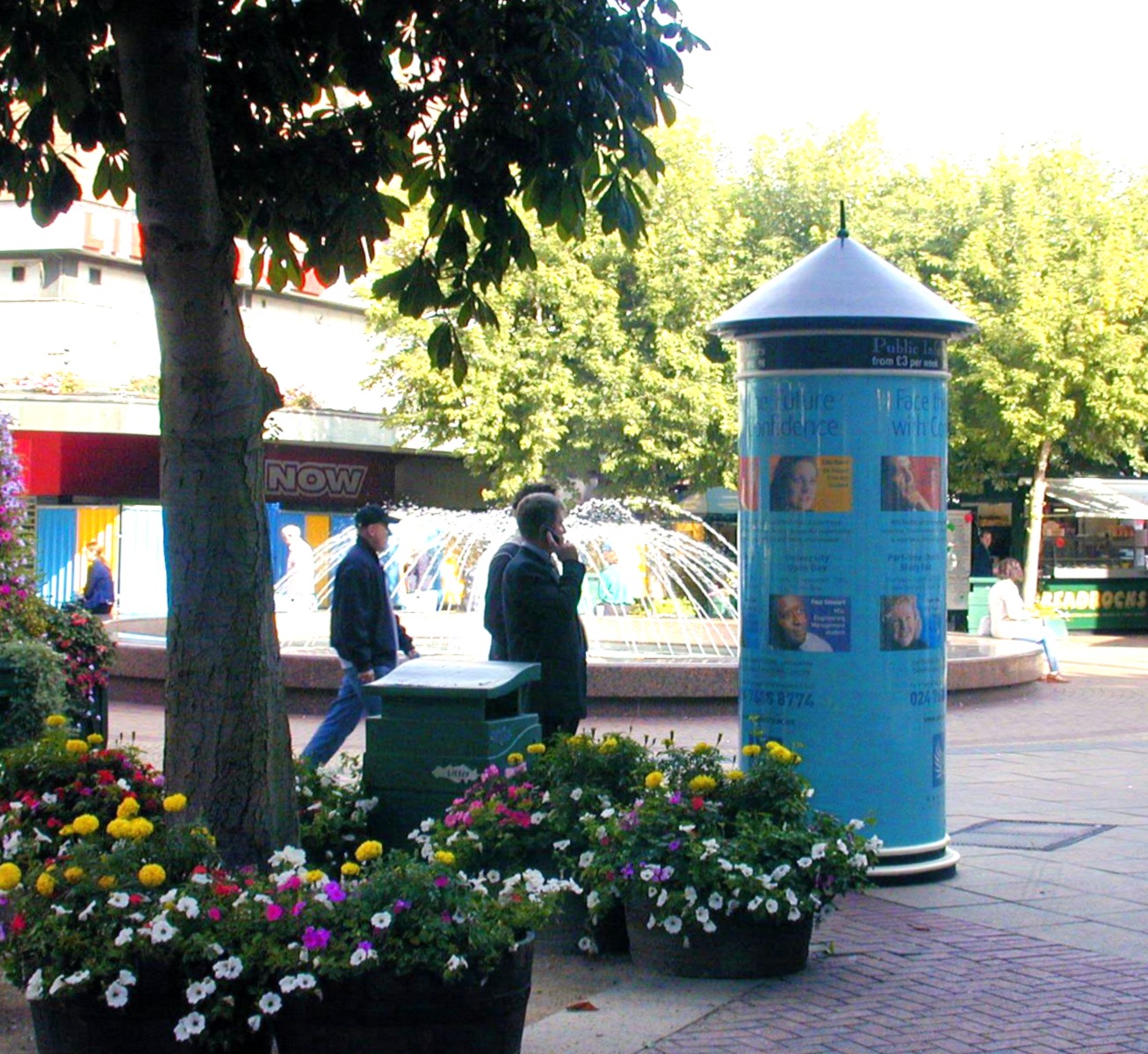
PIPadverts is a
local
service for
local
traders and events.
PIP is complimentary to national billboard or illuminated digital
street advertising. National advertisers and brand advertising
are not accepted as clients and, as such, pillars are no threat or
competition for national out of home media.
Be seen to be helping local businesses.
Communities
Communities benefit in multiple ways, especially theatres, voluntary groups, events and tourism.
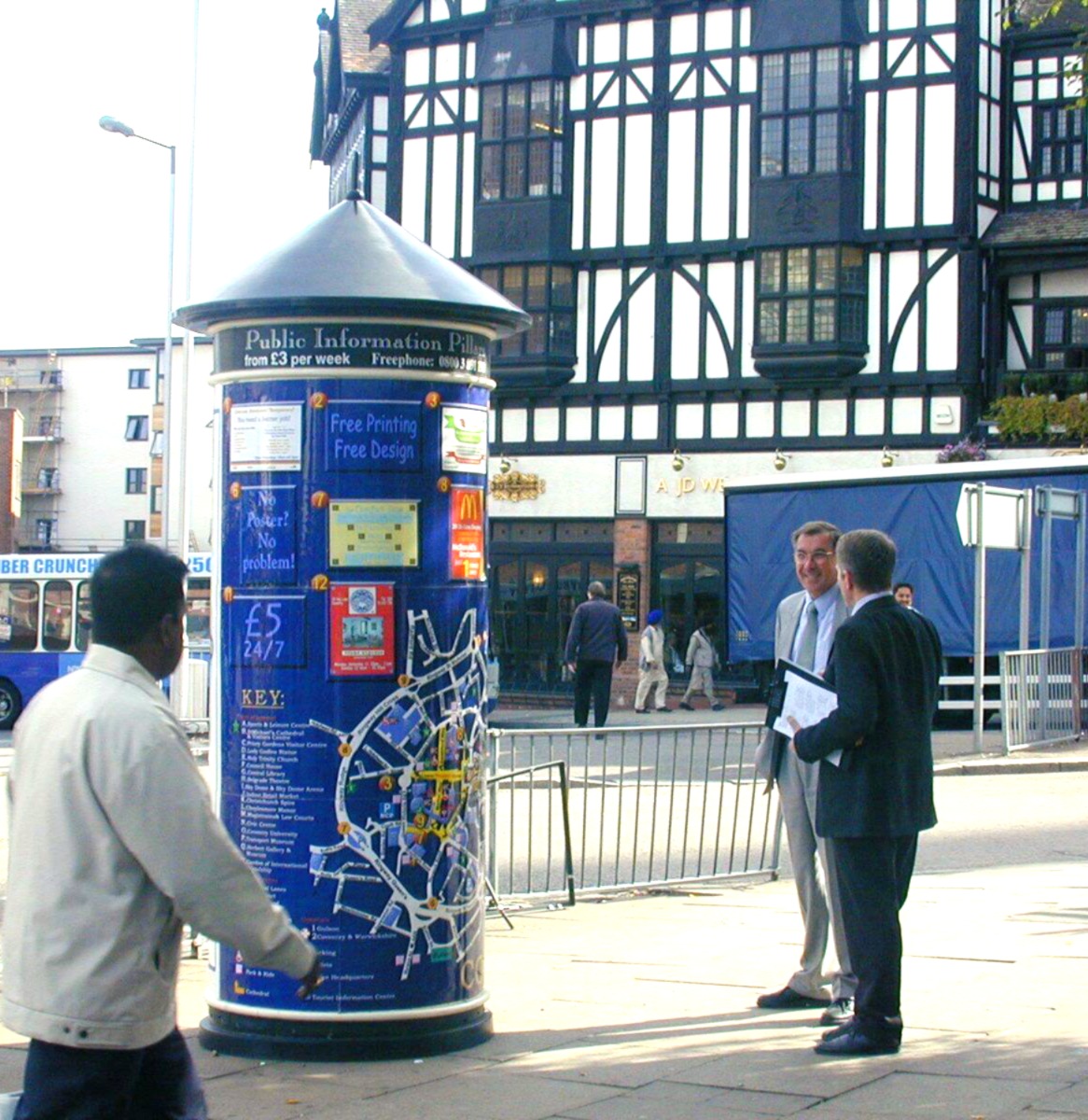
Wayfaring maps, displayed free of charge on pillars, show tourists how to find cultural and entertainment venues.
Museums, historical locations, theatres, entertainment parks and amusements, never mind the shopping areas and local gardens and tourist attractions are all featured free of charge.
Deserving Causes
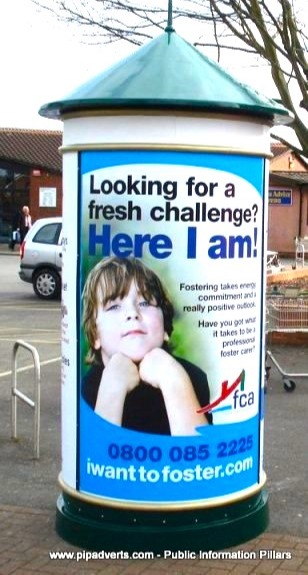
Local deserving causes, and we do differentiate between professional charities which have salaried staff and large organisations, get either a preferential rate at 50% discount, or are free of charge especially if they are completely voluntary and do not charge entrance fees.
We have given a real boost to local fund-raising events, charity runs, campaigns in support of cancer sufferers and many more…
Let the council be seen to support charities and good causes.
Events
Pillars are undoubtedly the most powerful advertising medium in the UK for events and entertainment. Panto's clamour for availability from November through to March every year.
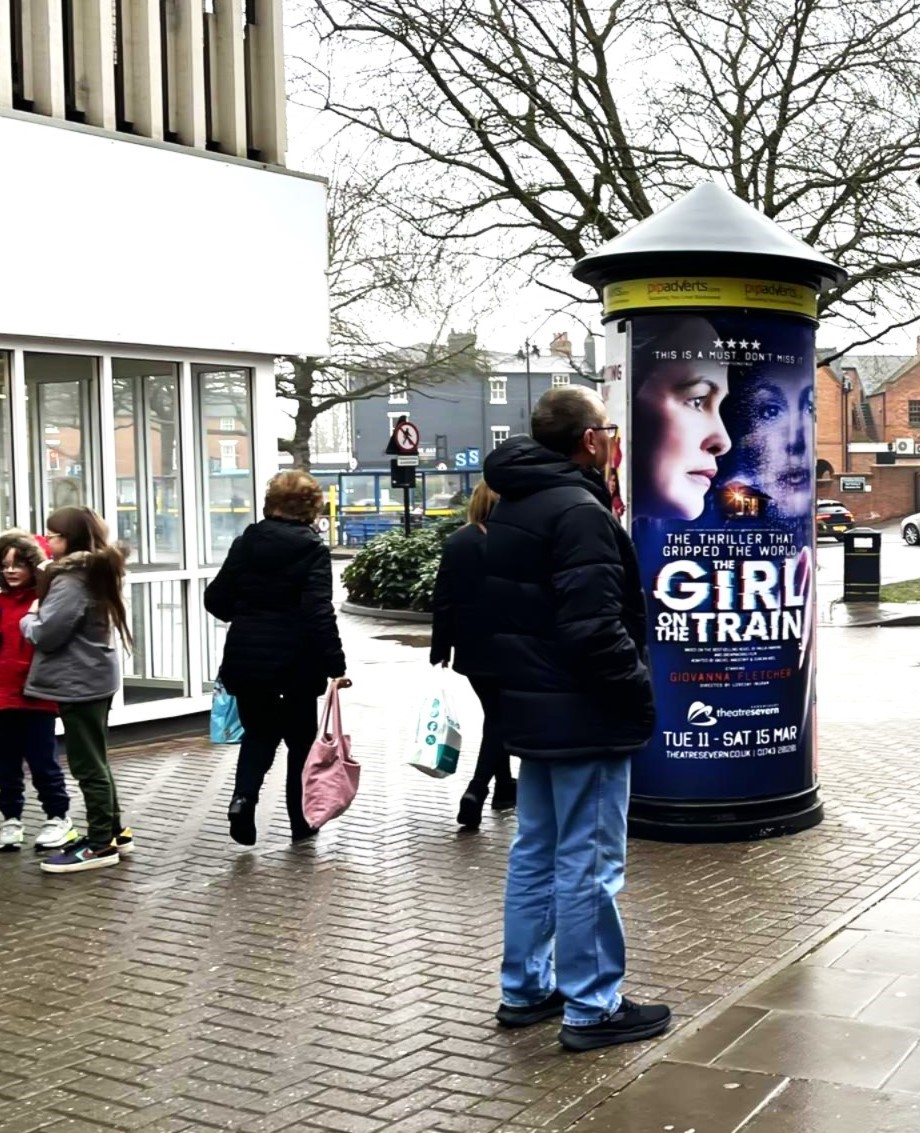
Tourist regions with amusement parks, arcades and summer attractions benefit massively from the large format exposure. There is no doubt that pillars are a boon to a towns' festivals, culture and theatrical heritage.
Pillars display what's on offer LOCALLY, where to go, what's going on, what to do. Tourists rarely read local papers, and how are they to find that bistro on the side street? PIPs make information easily available to visitors.
Show your support for theatrical productions and art world.
Public Information Pillars are affordable to businesses have the 24/7 high impact that events really need.
Free Standing
The pillars are made of glass fibre, therefore non-toxic and light to handle. In order to give them stability, they contain 600Kg of concrete blocks and so are free standing, and stable.
This allows them to be easily moved for road or pavement works or to simply re-locate to more convenient positions.
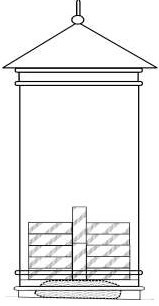
Many planners consider pillar a public utility and give deemed consent, the unit being in the public interest. In any case no ground works are necessary, and no damage is made to underlying surfaces.
Different designs fit well into townscapes be they traditional or modern.
Green Machine
Unlike digital advertising panels, which are extremely power hungry**, pillars are recyclable, require no electricity, are easily maintained and very reliable.
They do not break down and are designed to withstand Aberdonian gales (the national structural standard) and Glaswegian revellers.
Many towns are spending serious money converting to electric vehicles and taking our measures to reduce the carbon footprint, only to install, unknowingly, bright digital publicity screens.
Digital screens are not recyclable (pillars are) and they are massively power hungry.
A recent analysis demonstrates that a bus-shelter sized illuminated advertising board consumes the equivalent power of three 3-bedroom houses. **
**The electricity use of Digital Billboards - Adfree Cities
In addition, digital screens have a life of between 5 and 10 years, are vulnerable to vandalism and are not recyclable.
Historic
Many councils believe publicity pillars are European, or alien, or not part of the traditional British townscape. Surprisingly, this is untrue.
Public Information Pillars date back to the time of Shakespeare. They were most commonly used in theatre land during the Victorian heyday of the music hall.
Wikipedia says the national Lottery started on 19th November 1994. There are a few examples of pillars still around, of the original 18th Century publicity pillars, but here is a woodcut from 1824, which demonstrates that almost nothing is new.
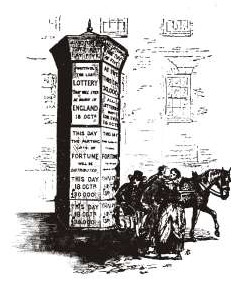
Historical note: Since medieval times people have been gambling organised lotteries. Public lotteries had been operating in England from Shakespeare's time and the reign of Queen Elizabeth I, until they were finally abolished in 1826.
This pillar (left) offered a £30,000 prize and in 1824 this was a fortune! Compared with todays' values it was worth £4,275,000.
Whilst the top prizes were paid, the heavily criticized state-sponsored lotteries were riddled with corruption, illegal “little-goes” and fraud, and deemed by Lord Kenyon as “the most profligate, infamous and abandoned of mankind”.
Illegal Advertising
Illegal advertising, A-boarding and Flyposting costs councils' money and, like graffiti, can spoil an otherwise attractive street scene.
Various initiatives have been undertaken by local authorities to try to reduce the Street clutter, and the impact on the environment, most to no avail.
Take a look at one towns' attempt providing flyposting pillars…
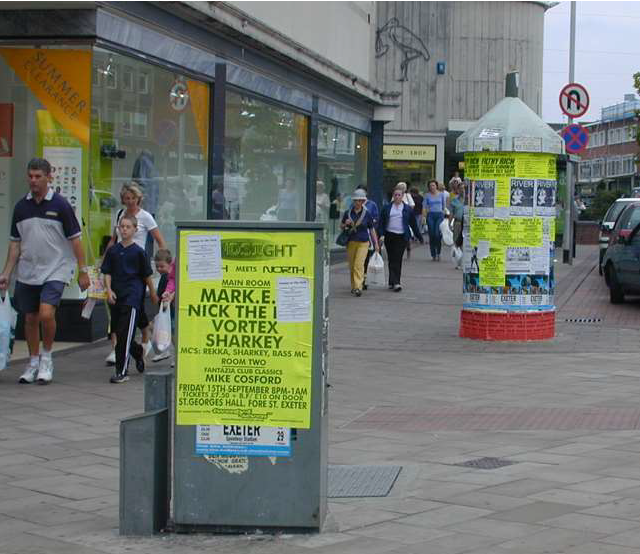
Clearly providing flyposting pillars simply encourages and legalises the practice.
The existence of flyposting pillars, “A” boarding and lamppost carding indicates the need for a legal alternative.
There is only one real answer.
Provide a legal alternative.
In this town, the installation of PIPs was followed by a targeted advertising campaign to persuade those using illegal means to take advantage of the pillars
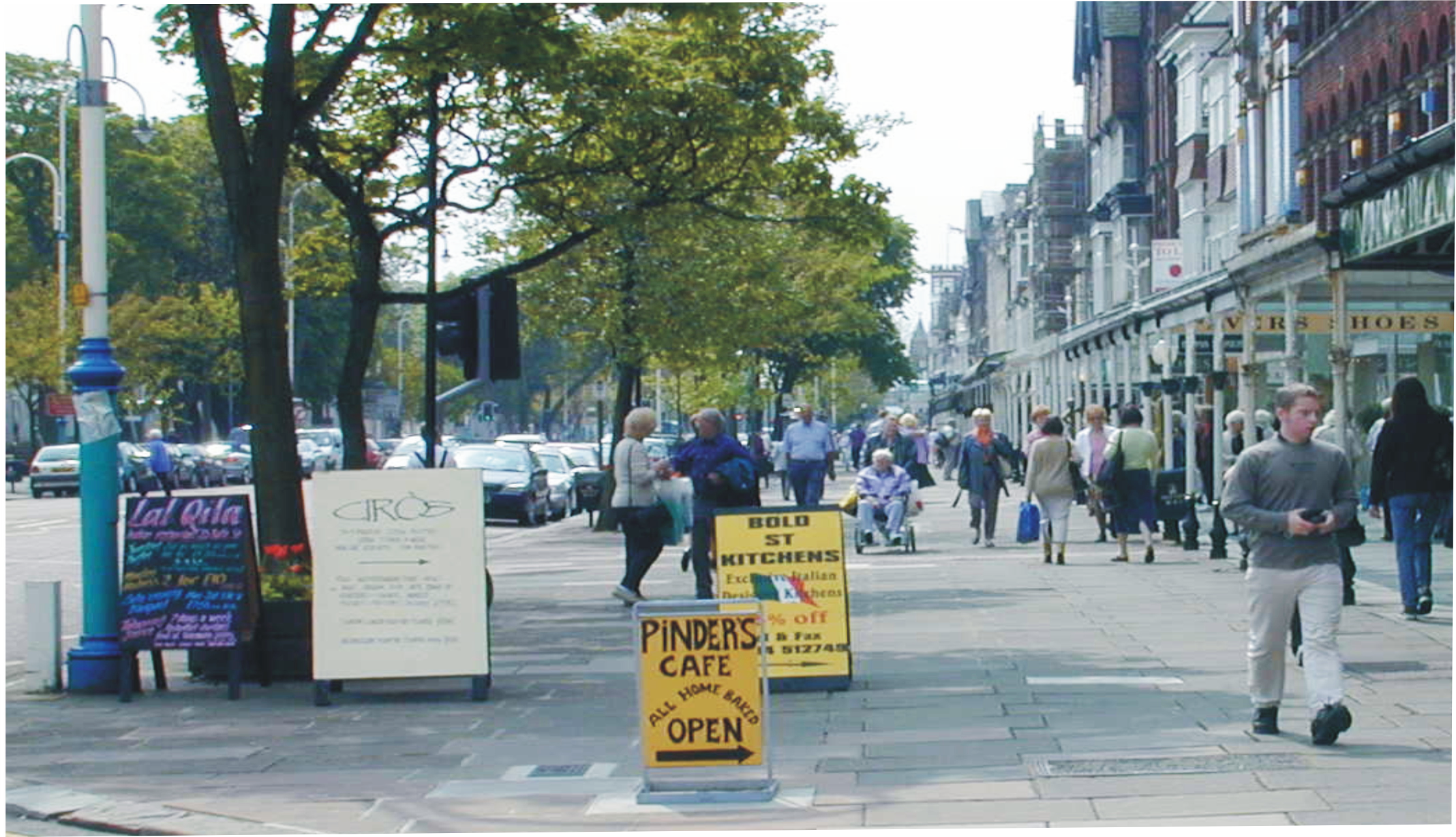
To PIP legal publicity
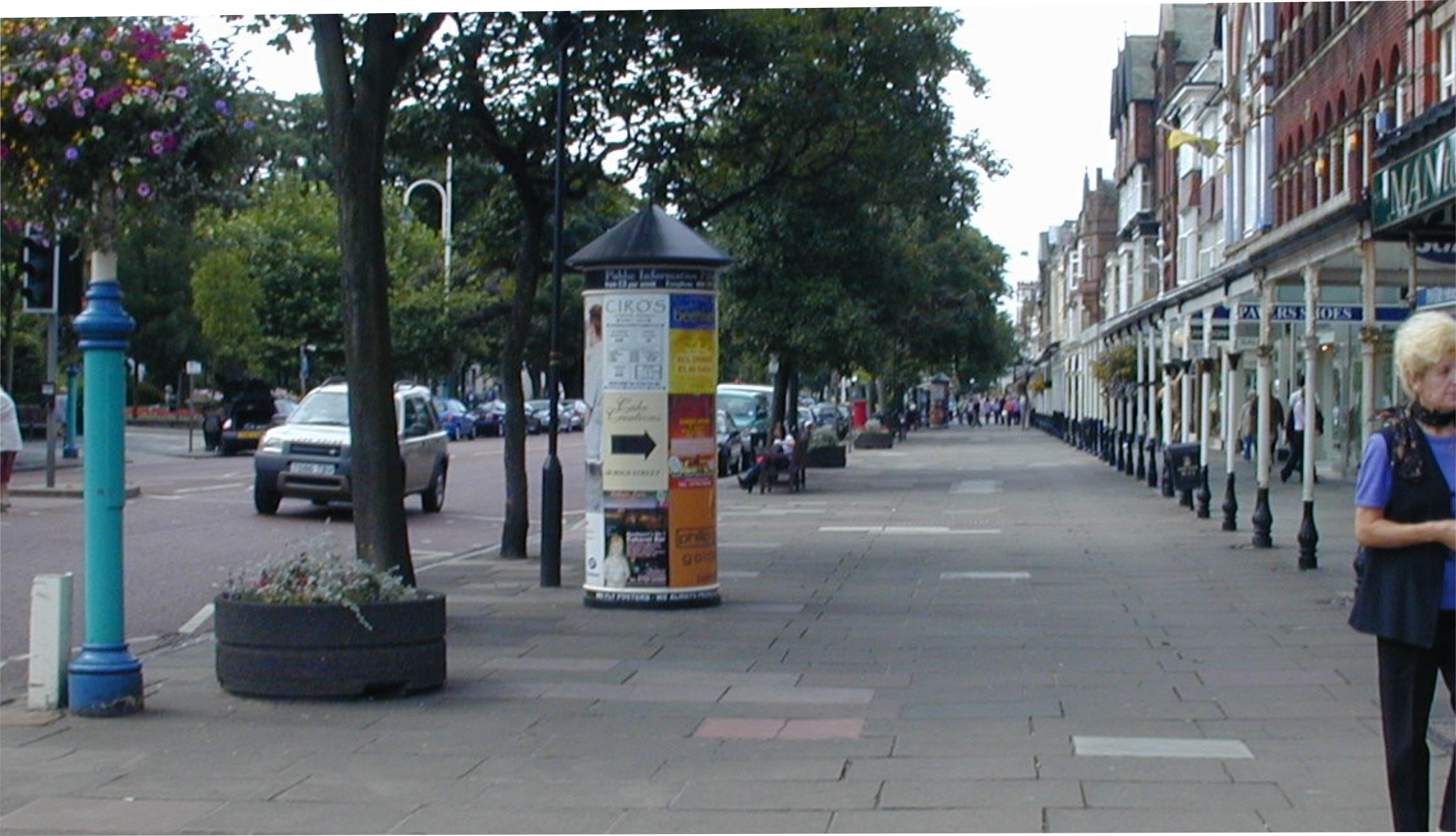
Every picture tells a thousand words - One pillar replaces 9 “A” boards.
Information - Details and Planning Issues
The style The colour and style of the pillars are customised to blend in with existing street furniture.
A PIP contains 500kg of concrete ballast.
Maintenance PIPs are maintained daily by well-trained maintenance staff.
PIP staff are employed locally and covered by £10m public Liability insurance and £5m employer liability insurance.
Installation takes 30 minutes. Easily moved/removed by our staff, no damage to block paving.
PIPs are normally located on Highways Authority property and under County control. However, "for the purposes of information, advertising and providing a service for the benefit of the public", these may fall under Local Authority jurisdiction. The Local Authority has a "duty to consult" the Highways Authority and the Highways Department has the obligation: "Consents not to be unreasonably withheld". ** Outdoor advertising regulations
PIP works together with the Highways Authority, the Planning Authority, the conservation department, disabled access groups etc., in choosing the most acceptable sites.
Exclusion agreements became illegal with the introduction of the Competition Act 1998. The Act is effective retrospectively. Agreements made before 1998 were given a 12-month transitional period to conform to the new regulations.
The Enterprise Act 2003, making some offences criminal and punishable by imprisonment, further strengthened the Competition Act. Sutton Media Ltd neither requests exclusion zones, nor demands exclusivity and is happy to work alongside national advertising displays, not competing with them as the PIP market is purely local.
Site selection, Planning Applications, Public Notices, Highways Act 1980 Licences, Staffing, Storage, Marketing etc., etc., PIP does it all for you at no cost whatsoever…